An Interview with Agnes Vojta
Co-produced by Elizabeth Bruce & Robert Michael Oliver
As part of our ongoing series of text interviews with writers, poets, visual artists, and other creative folk, Creativists in Dialogue is delighted to share this interview with Elizabeth’s friend and colleague Agnes Vojta, whom she knows and admires through an amazing online “Poetry Game.”
NOTE TO READERS: If you, or a creative person you know, would be a great candidate for a text-and-image-only interview on our Creativists.Substack.com page, please reach out to Elizabeth or Michael at elizabethbrucedc@gmail.com or Rmichaeloliver@msn.com.
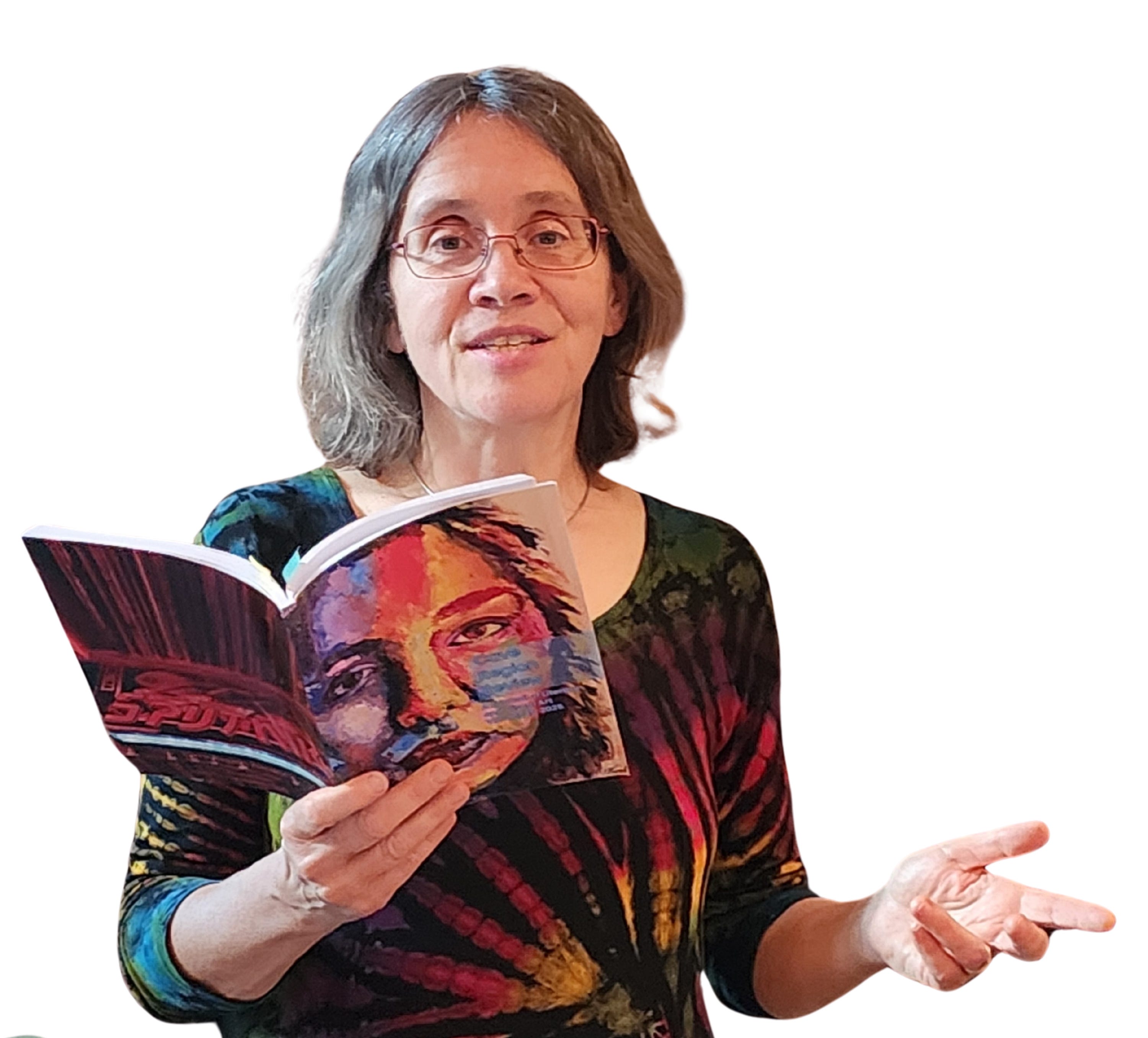
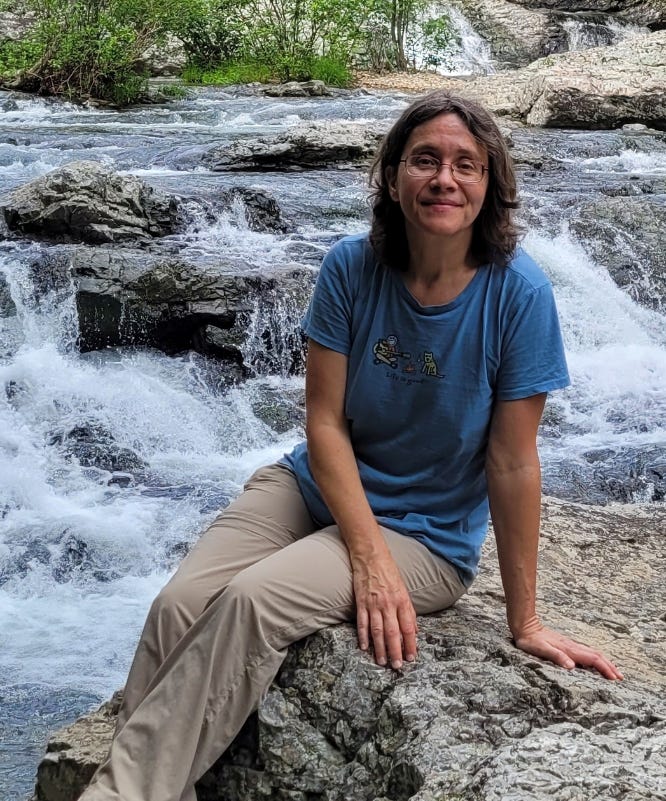
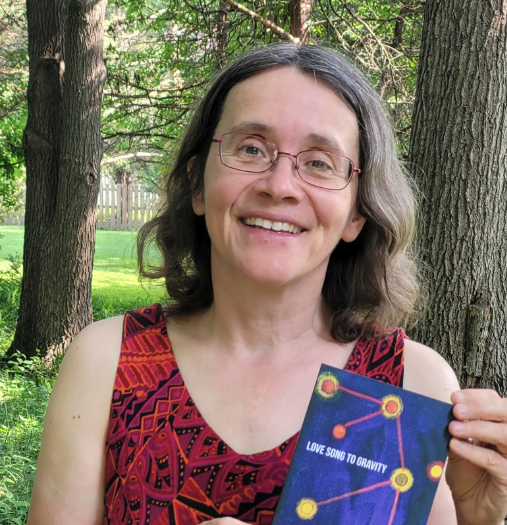
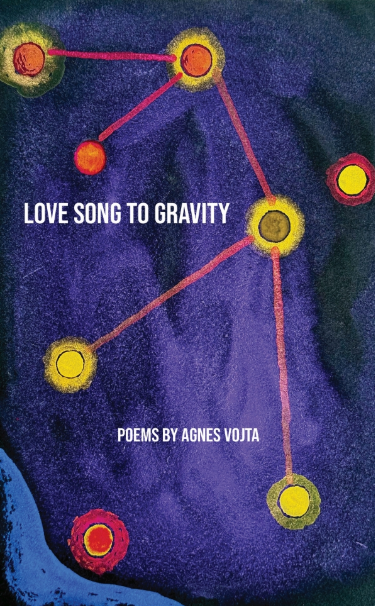
Agnes Vojta grew up in Germany and now lives in Rolla, Missouri, where she teaches physics at Missouri S&T and hikes the Ozarks. She is the author of four collections of poetry. Her latest, Love Song to Gravity, was published by Stubborn Mule Press in 2025. Agnes is Associate Editor of Thimble Literary Magazine and host of the Poetry at the Pub reading series in Rolla. Her poems have appeared in a variety of magazines; you can read some of them on her website:
https://agnesvojta.com/
Tell us about one or two historical events that had a significant effect on your creative life.
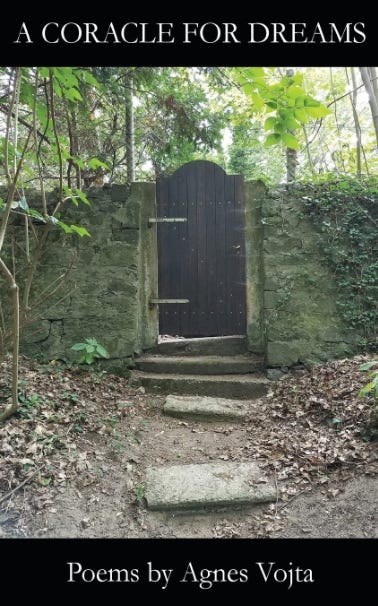
The most important historical event for me was the fall of the Berlin Wall. I grew up in communist East Germany, and the Wall fell after my third year of college. This opened the world for us and allowed me ultimately to emigrate to the US. Because of this, English became my emotional, creative language, and I now write exclusively in English. Emigration, even under the best circumstances, always carries trauma: the loss of family and friends, of culture and native language. The immigrant experience is a recuring theme in my work and one of the main topics in my book A Coracle for Dreams.
From: A Coracle for Dreams, Spartan Press 2022
Naming
My first day here it snowed,
and birds like drops of blood
sat in the grey-green branches of a tree.
I was a stranger. Did not know
the names of tree or birds.
Naming is knowing.
Naming means: to tell apart,
to be familiar with the detail
that separates one from the other.
Familiarity breeds love.
I learned to name the cedars
and the cardinals, anemone
and great blue heron, spiderwort
and wild geranium. Every year,
I add new names: white avens,
thimbleweed, rose-breasted grosbeak –
every one another root
I grow here.
Craft and Technique for Poets & Lyric Writers:
William Carlos William wrote: “No idea but in things.” What role does the image play in your poetry.
I am an imagist at heart. My poems are image driven. I love stripping down the language to the bare minimum, capturing the essence of an image.
Similarly, Emily Dickinson focused her poetry on minute details and seemingly “insignificant” moments. Does your poetry lean toward a more Dickensonesque perspective of the world, or do you focus on larger action? Why?
I focus on details. The detail is specific and accessible to sensory description. Because of that, details have a more powerful emotional impact than sweeping, big-picture statements. We have an emotional response to the concrete, not the abstract. And the concrete begins with close observation of something small.
From: Love Song to Gravity, Stubborn Mule Press, 2025
Interruption
The birds scatter.
A large-winged shadow
swoops –
settles on the dead
branch above the feeder.
The hawk surveys the field.
When he flies off, the branch
bounces up and down –
long after he is gone
and the chickadees are already back,
chirping and chattering
as if nothing happened.
O that we may so regroup after peril,
return again and again
to our ordinary lives.
Memory, Trauma, and Subjective Truth
How important is it that readers understand your poems? Why do you feel this way?
I don’t know what it would mean to “understand” my poem. I feel I have succeeded with a poem if it speaks to a reader and means something to them. The reader’s meaning may be completely different from what I was thinking about when I created the poem. I wrote the poems in my first collection, Porous Land, when my daughter was leaving for college; they speak about loss, about learning to live without the person who is no longer there, but don’t mention the words “daughter” or “college” anywhere. Readers have told me how much meaning the books held for them as they lived through divorce or bereavement. The poems spoke to them in their life situation. I can’t think of a more rewarding kind of “understanding”.
I Watch You Sail Away
on the blue stream of the years,
uncharted
current and tides,
different than they were
on my voyage.
My tattered maps
will be of no use to you,
but I gave you
my compass—
this has to be
enough.
What are the experiences or themes that center your poetry?
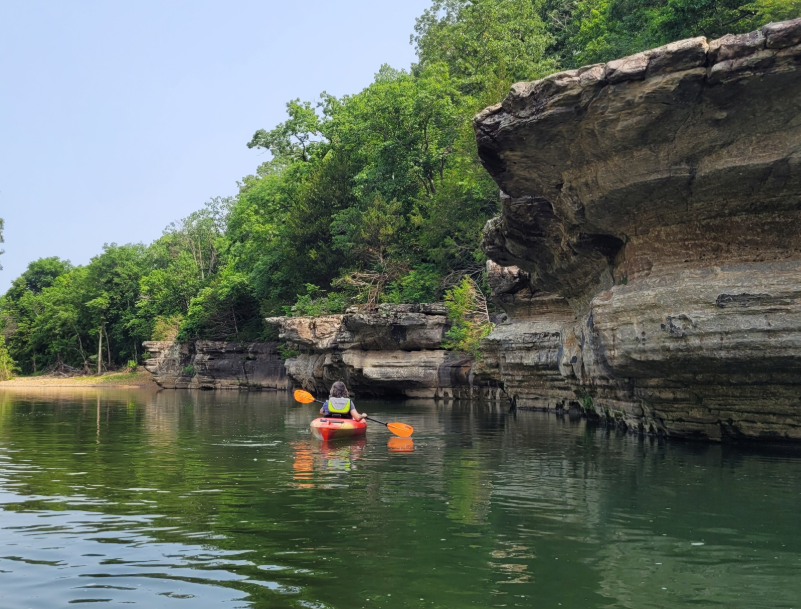
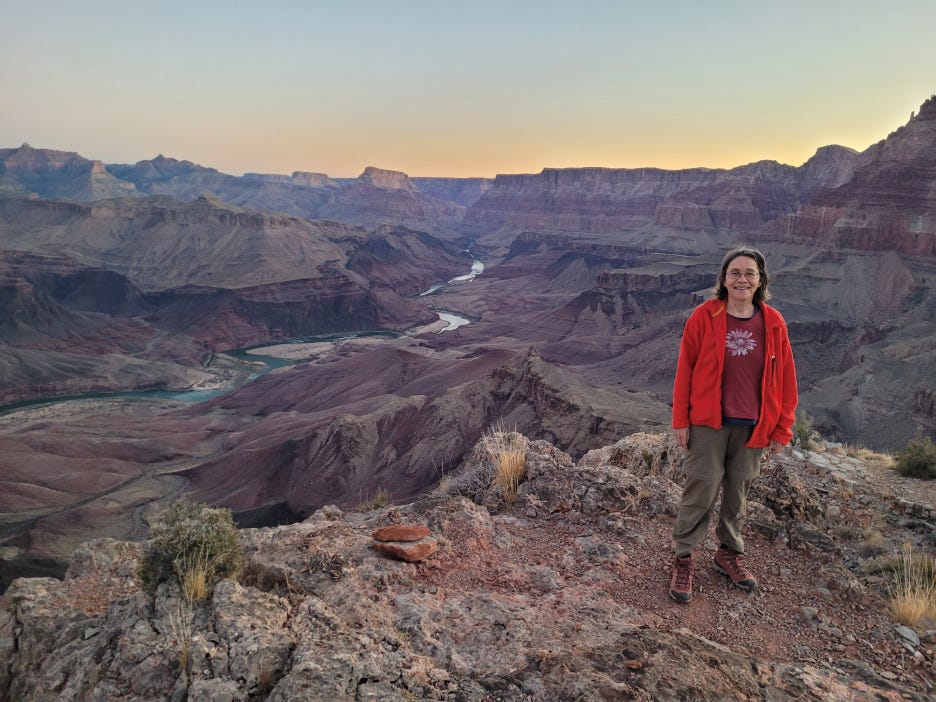
My writing is deeply rooted in nature. I am an avid hiker, kayaker, gardener, and hobby botanist. For me, attention to, and connecting with, nature is spiritual practice. The wilderness speaks a deep truth that surpasses what we can grasp intellectually; when I can listen to it, I feel balanced, connected, and at peace. Immersing myself in nature, in close observation, makes me notice things that connect with thoughts about life and the human condition. Nature often gives me the metaphor to express something I can’t otherwise put in words.
Identity, Class, and Personal Experience
Where did you grow up, and how has your upbringing influenced you? What other life experiences—jobs, parenting, caregiving—have shaped your creative self? How do social class and financial realities influence your writing and your characters?
I grew up in Dresden, in East Germany. I started writing poetry as a child. My dad was an architect, and my mom an opera singer; I grew up in a household filled with books and songs. I loved memorizing poetry, loved words and rhymes, and it just happened that I would start writing my own. I read all the time and wrote adventure stories, but by my teenage years, I wrote only poetry.
When I emigrated from Germany to the US, I found myself unable to write. I was fluent in English and could teach and do everything– I just could not write poetry. It was very frustrating. It took over ten years, until English had become my emotional language, and I was able to write again.
I am a physics professor and was teaching part-time while I was raising and homeschooling my children. During those years, I barely wrote – I didn’t have the space in my brain. It wasn’t until my oldest left for college that I found myself with energy and free time and decided to become serious about writing. Within a few years, that took off in ways I had not imagined.
Education, Mentorship, and Social Capital
Have writing groups been helpful for you?
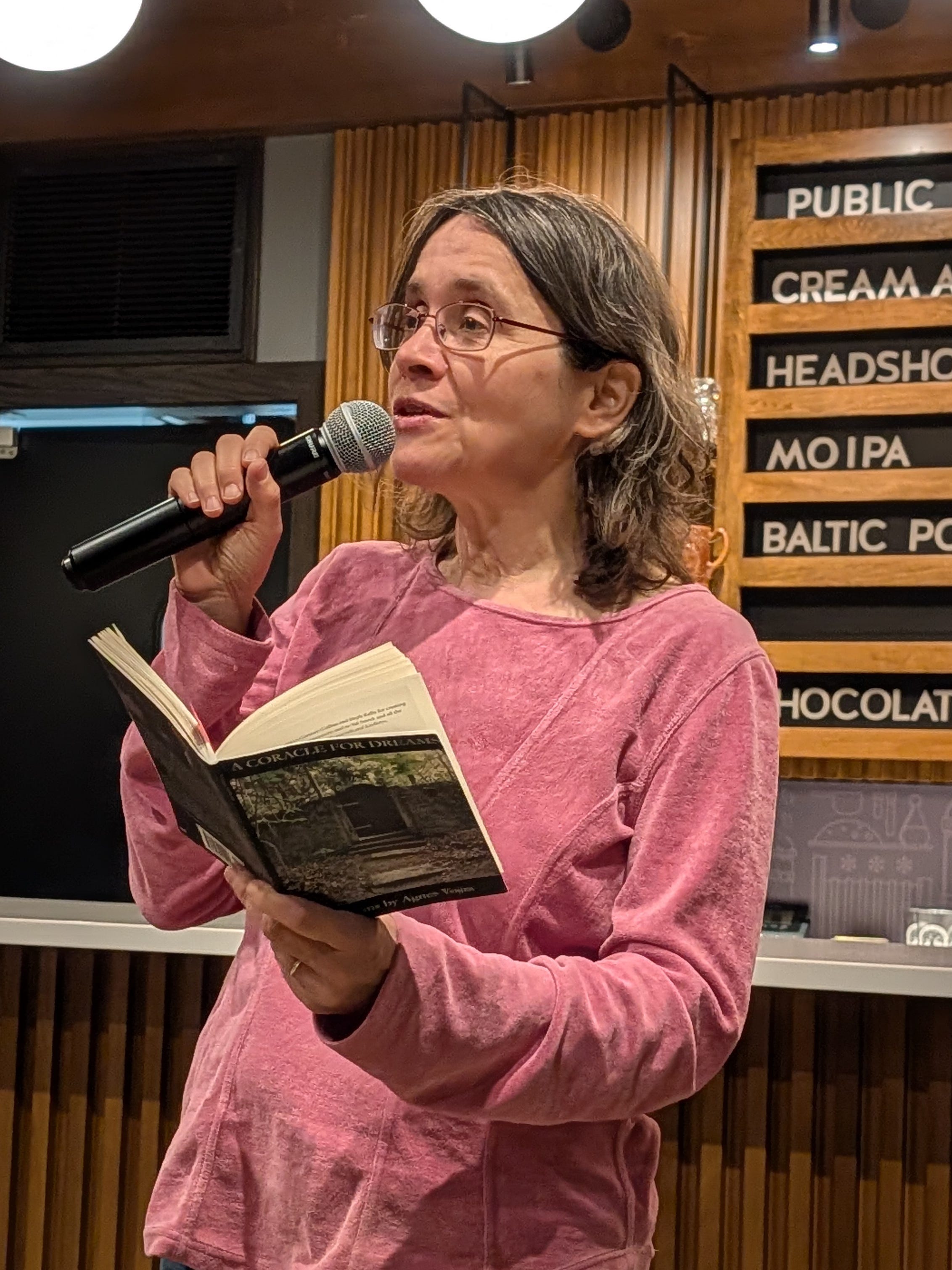
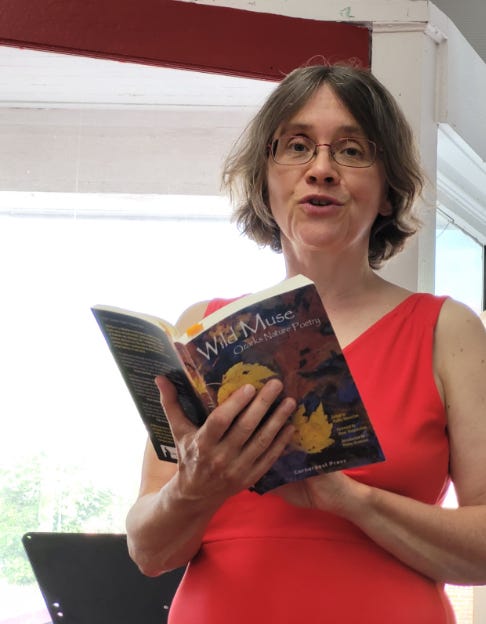
Oh yes! Writing poetry is a solitary occupation, and I find it very important to have community. I didn’t know any other poets until eight years ago, when I went to my first open mic in a small bookstore in a tiny town. I hadn’t read my poetry out loud before, and I was nervous. And everybody was so nice and supportive, that was great. It’s important to find people that lift you up and support you.
I am part of a group of writers who come together on Zoom a few times a week. We play what we call “the poetry game”. Every person suggests a few words, and we make a word list. Then we all go away and write for half an hour or so, inspired by the words on the list, and then we get back together and read out loud what we have written. Because the words come from all the different people, you end up with words you would never have thought to use in a poem and come up with ideas you might not have had otherwise. And because we come back together and read, I feel held accountable and won’t goof off. I often write prose during these sessions, and then I whittle it down and excavate the poem that’s hiding in there. The focus of the group is on generating, not critique, but we’ll offer feedback if asked. Most importantly, the group serves as container and support for each person’s creative work.
Writing Life & Daily Practice
Do you have any physical practices (like running or yoga) that support your writing process? Do you have hobbies or side pursuits that enrich your writing life?
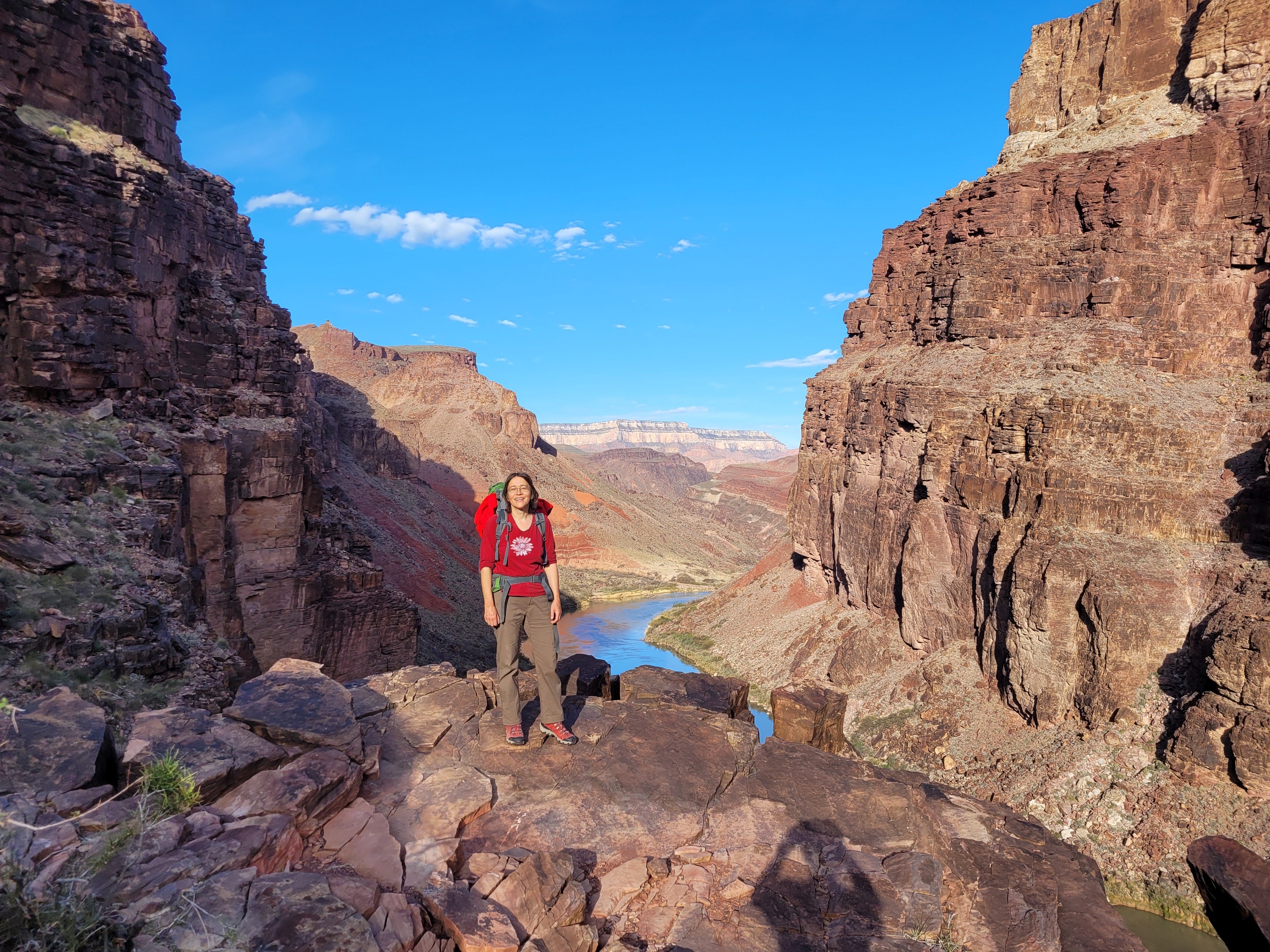
I spend a lot of time in nature, hiking, backpacking, kayaking, or gardening. I need it for my physical and mental health. Even in times of greatest stress, one day of the weekend is sacred and my husband and I spend it in the woods or on the river. This is also a spiritual practice for me, my way of meditating. Getting away from the chatter of civilization and connecting with nature grounds me and puts everything into perspective. It clears my mind from the daily concerns and opens it up for writing.
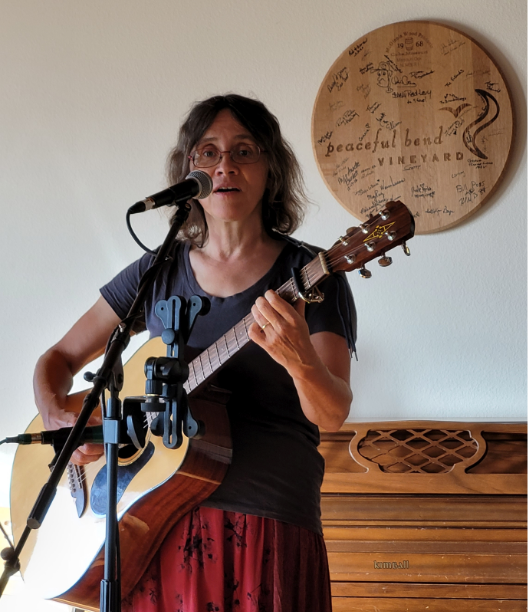
I dabble a bit in songwriting. When I am blocked in “serious” writing, I play with songs and allow myself being silly or sentimental and just have fun.
Validation and Recognition
What standards do non-artists seem to apply when deciding if someone is a “real artist”? Do your friends and family view you as a writer or artist? Are they supportive? How do you respond if those standards don’t fit your life? How do you stay committed to your work if it is not bringing fame or riches? What emotional or spiritual practices sustain you?
I have wrestled with this question a lot. I had internalized the cultural cliché that an artist who is suffering for his art in a crummy garret and tends bar at night, barely covering rent, is perceived as a “real” artist, while a person with a middle-class full-time job is seen as an amateur. For many years I identified myself as a physics professor who writes poetry on the side, but would have found it preposterous to call myself a poet.
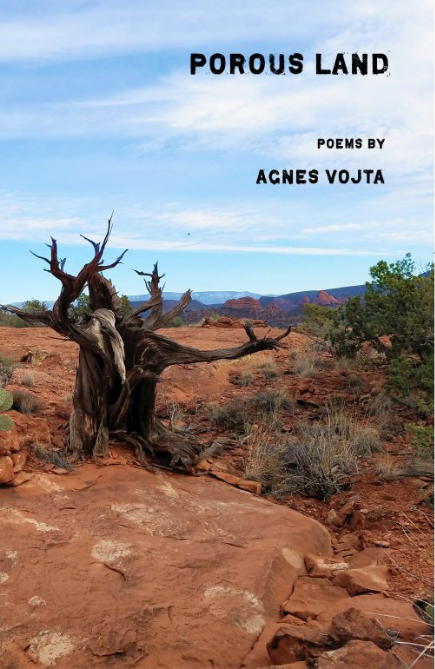
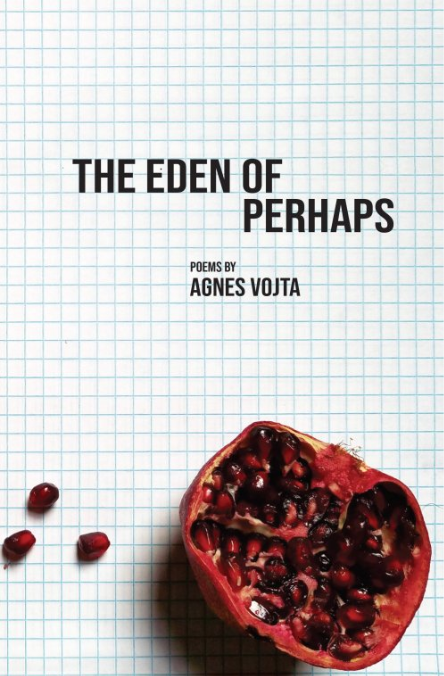
Publishing my first book was the milestone that gave me the validation to identify as a poet who is teaching physics as a day job, which was a huge paradigm shift for me. I didn’t need the book to prove to others that I am a poet – I needed it to prove it to myself.
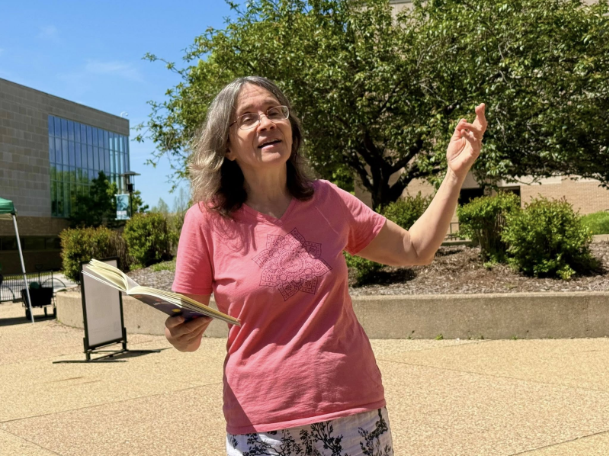
My friends and family, and a wider community beyond that, see me as a bona fide poet. Over the past years, I have created a local poetry community in my town. I run a reading series at the local brew pub, organize poetry events on the university campus, and give lots of readings all over the area, in libraries, schools, at the community garden. So a lot of folks know me as “Agnes the Poet”.
Poetry is bringing neither fame nor riches, but it gives me the joy of creating, and it has connected me to other people and deeply enriched my life. I have found wonderful friends through poetry. I have collaborated with other artists on several projects; in the fall, I will have ekphrastic poems alongside the artist’s paintings in a gallery show in Taos, New Mexico.
Final Thoughts, Advice & What’s Next
What advice do you have for other writers and artists on how to sustain their creative practice?
I have been frustrated by periods of creative drought and blocked writing. What helped me was to recognize the cyclical nature of creating: periods of high output alternate with times I am not writing. I have learned to be patient and trust that these times are important for “filling the well”. I am not only a writer when I am actively writing, but also when I am experiencing the world, watching nature, storing images and thoughts for the future. I like to think of these periods as fallow times; just like a field has to lie fallow to allow the soil to replenish and restore its fertility, I think the creative mind needs to rest from output as well. Rephrasing and accepting this instead of pushing has given me more peace.
For more information about Agnes Vojta or to purchase any of her books of poetry, please visit her website at: https://agnesvojta.com/
Great interview and photos! Loved reading about “Agnes the poet!”