


Today, we are happy to return to our Across Generations Series with Part 1 of our conversation with native Washingtonian, sustainability advocate, nonprofit leader, and new father, Rafael Woldeab.
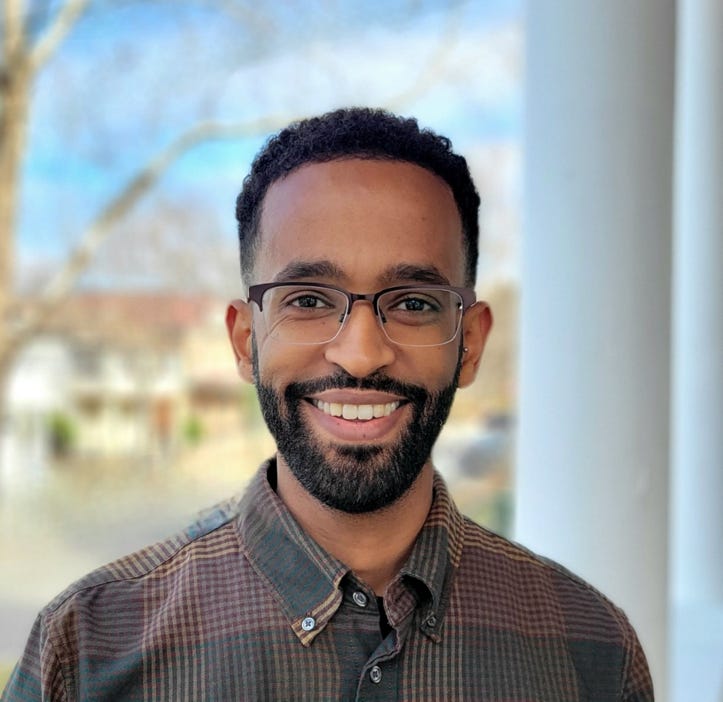
Rafael Woldeab, a native Washingtonian and son of Eritrean immigrants, is Executive Director of City Blossoms, an award-winning 501(c)3 nonprofit organization that cultivates the well-being of our communities through creative programming in kid-driven gardens. Raf first joined the City Blossoms team in 2015 as a seasonal intern. Since then, he has remained an integral part of the organization, serving on its board of directors for four years and, most recently, as its board chair. He received his bachelor’s degree in Environmental Policy from Sewanee: The University of the South as a Posse Scholar, and has over 11 years of professional background in community organizing and justice-centered program development. He is also the founder of Masc-Off, a community organization committed to dismantling harmful forms of masculinity. When not getting his hands properly dirty in the garden, Raf enjoys practicing photography, discovering new music, and playing recreational soccer.
For more information about Raf and his work, go to City Blossoms.
We are eager to hear from our subscribers. If you like the conversation or have a comment or a question, use the comment feature or the heart button below. And thanks in advance for sharing this podcast with your friends and colleagues.
To those of you who are FREE subscribers, please consider becoming a PAID subscriber so that Creativists in Dialogue and its Theatre in Community Project can continue bringing you interesting and insightful conversations about creativity and theatre from DC and beyond.
Special shout out to Creativists in Dialogue’s Audio Engineer Elliot Lanes and our Transcription Editor Morgan Musselman.
For more information about Creativists in Dialogue or our other projects, please visit elizabethbruceDC.com or rmichaeloliver.com.
This project is (or has been) supported in part by the DC Commission on the Arts and Humanities, HumanitiesDC, and by subscribers like you.


